Table of contents
Chasing “the place to be” has become a reflex, powered by short-form video, algorithmic wish lists, and bargain alerts that disappear in hours, and 2025 is shaping up as another record year for international travel, with global tourism expected to fully consolidate its post-pandemic rebound. Yet behind the glossy reels, the costs of following the crowd are mounting, for travellers and for destinations alike, from longer queues and price spikes to stricter rules and fraying local goodwill. The question is no longer where everyone is going, but what you give up when you go there too.
Overtourism now changes trips in real time
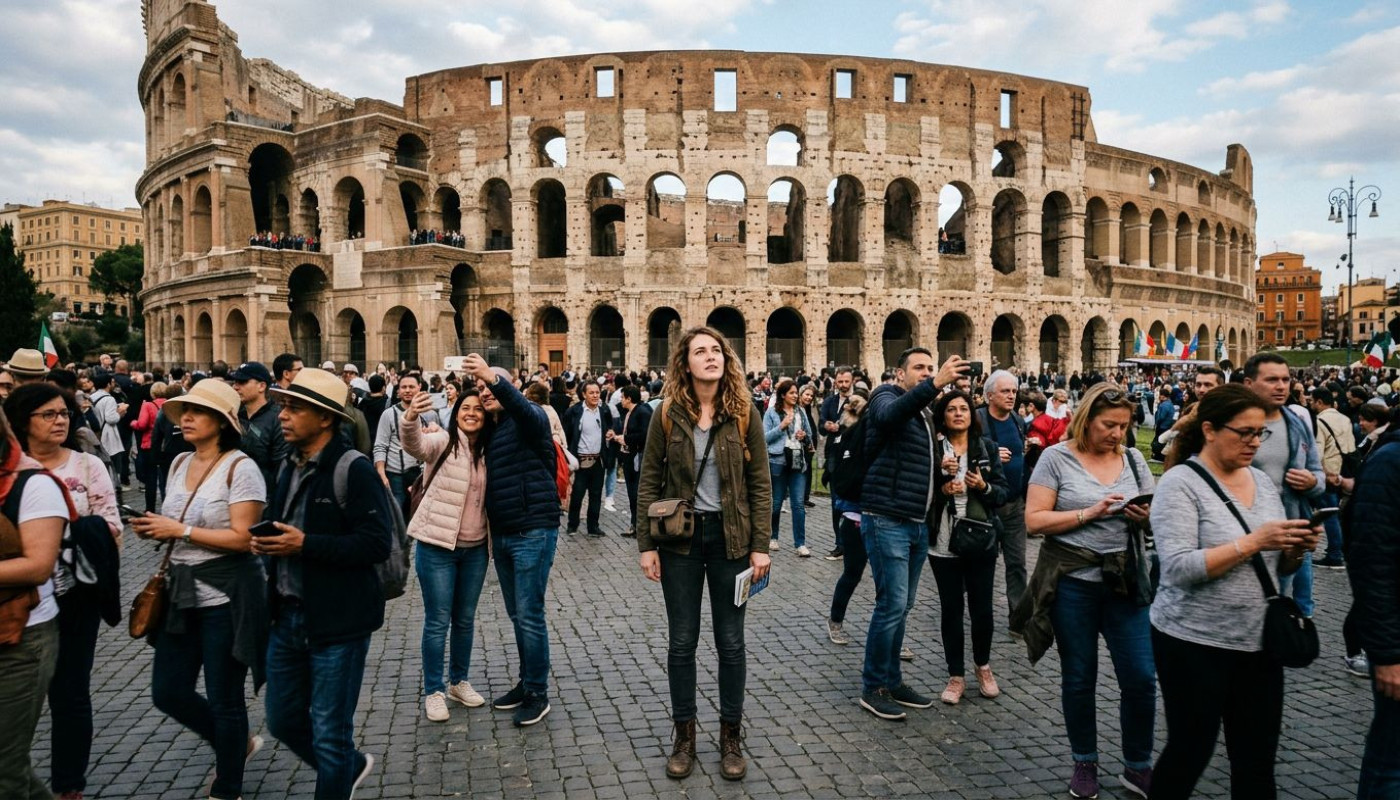
It starts innocently, a destination trends, flights fill, and the “must-do” list becomes a checklist race against everyone else. But overtourism is no longer an abstract debate; it is a force that reshapes your day-to-day experience on the ground, often in ways you only notice after you have paid. Venice, for example, has moved beyond warnings and into policy, introducing an entrance fee for day-trippers on peak dates, and tightening controls around group movement. Across Europe, cities and islands are experimenting with caps, timed entry, and enforcement, while popular museums, beaches, and viewpoints increasingly require pre-booking, turning spontaneity into a luxury item.
For travellers, the immediate impact is time and friction. A two-hour queue is not just an inconvenience; it compresses everything else, pushes meals into odd hours, and nudges you toward overpriced options nearby, because leaving the area means risking your slot or missing the sunset you came for. When crowd density rises, the quality of the “iconic moment” declines too, photos become exercises in cropping strangers, noise levels climb, and the sense of discovery can feel replaced by the choreography of mass tourism. Even safety and comfort shift, with packed transport, limited shade in peak summer heat, and higher risks of petty theft in congested corridors that are easy to work for professional pickpockets.
There is also a subtler effect: overtourism can harden a destination’s posture toward visitors. Residents who feel priced out or disrupted often demand tougher rules, and authorities respond, not to punish travellers individually, but to preserve basic liveability. The result can be a less welcoming atmosphere, more restrictions on where you can sit, eat, swim, or park, and a general sense that the city is managing you rather than hosting you. If you have ever wondered why a place felt “tense” despite its postcard beauty, the answer is often the pressure of too many people, arriving at the same time, doing the same things, in the same few streets.
The “viral premium” is hitting wallets
Trending destinations do not just get busier; they often get more expensive in ways that are hard to predict from the headline airfare. The price surge shows up in accommodation first, where limited stock in historic centres or on small islands meets sudden global demand. Dynamic pricing then does the rest, pushing room rates up for weekends, school holidays, and even specific event dates that social media boosts. In parallel, restaurant menus quietly adjust, not necessarily because ingredients cost more, but because visitors will pay more for location, convenience, and the story of “eating where everyone eats”.
What makes the viral premium particularly frustrating is that it tends to be lopsided: you pay more, but you do not necessarily receive more. Service quality can drop under staffing pressure, check-ins become rushed, tables turn faster, and staff have less time to guide you toward lesser-known dishes or neighbourhood spots. Attractions, too, increasingly monetize access, fast-track tickets, “skip-the-line” add-ons, and timed entry systems become the default, and families find themselves paying extra simply to keep the day manageable. In highly saturated markets, even basic costs such as taxis, short ferries, and last-minute transfers can spike, especially when supply is constrained.
Meanwhile, the secondary costs accumulate. When iconic areas clog, you take detours, you use more ride-hailing, and you spend more on convenience stores instead of proper grocery runs. If a restaurant is fully booked for the next two nights, you settle for an overpriced terrace near the main square, and that choice repeats. The money leak is often invisible until you review your bank app at the end of the trip. This is why travel economists and consumer groups increasingly advise budgeting beyond the “average daily spend” you see in generic guides; the average becomes meaningless when demand concentrates into a handful of neighbourhoods and time slots, exactly what trend-driven travel tends to do.
Culture gets flattened into a checklist
Ask a frequent traveller what they miss most in crowded hotspots, and it is rarely the landmark itself. It is the texture around it, the ordinary street life, the small conversations, the unplanned detour that becomes the highlight. When a destination becomes a trend, culture can be compressed into a standardised itinerary: the same three viewpoints, the same “hidden gem” that is no longer hidden, the same café order that looks good on camera. You do not just share the space; you share the script, and that script can be surprisingly limiting.
Local economies also shift in response. In high-demand corridors, traditional shops are replaced by souvenir chains, short-term rental management offices, and menus designed for speed rather than identity. This is not a moral judgement; it is the logic of rent and turnover. Yet it changes what you, as a visitor, can actually experience. Authenticity is a slippery word, but there is a concrete version of it: the ability to interact with everyday life without it being fully engineered for visitors. When residents move out, when schools shrink, when corner bakeries become gelato stands, the cultural ecosystem thins, and the “feel” that made the destination special begins to fade.
None of this means you should avoid famous places outright. It means you should treat trend-led itineraries with scepticism and build in alternatives that widen the lens. Some travellers do this by shifting season, visiting in shoulder months, and accepting cooler weather in exchange for breathing room. Others widen geography, spending two nights in the iconic city, then four in the surrounding region where the culture is often just as rich, and sometimes more accessible. If you are looking for ideas that lean into regional depth rather than the loudest hotspots, look what i found, a reminder that the best travel stories often begin when you step away from the algorithm’s main stage.
How to travel smarter than the trend cycle
So what does a smarter approach look like, without turning travel into a dissertation? Start with one practical rule: separate “I want to see it” from “I must see it now”. If a destination is in peak virality, ask what is driving it, a new flight route, a television series, a single viewpoint, and whether that hook is worth the trade-offs in cost and crowding. Then consider the levers you can actually control: timing, neighbourhood choice, and itinerary design. Arriving early is not glamorous, but a 7:30 a.m. museum slot can feel like a private viewing compared with a 1 p.m. crush, and the photos, if you care, will be better too.
Accommodation strategy matters more than most travellers admit. Staying in the most famous district can be convenient, but it also traps you in the densest zone, where prices are highest and crowds are constant. A well-connected “ordinary” neighbourhood often delivers a better trip: calmer evenings, more local dining, and transport links that make early starts easier. The same logic applies to day trips, if everyone is going to the same cliffside village at 11 a.m., go at 4 p.m., or reverse the route, starting where buses end and working back. In coastal destinations, swap the headline beach for a series of smaller coves, and in mountain towns, pick a trail that is not the first result on a video platform.
Finally, think about your impact in concrete terms. Book licensed guides where appropriate, choose experiences that spread spending beyond one street, and respect new rules even when they feel inconvenient, because they are often responses to real strain. Travelling smart is not about being contrarian for its own sake; it is about reclaiming the reasons you travel in the first place. Trends promise certainty, but the best trips usually contain some uncertainty, the freedom to linger, to change plans, and to feel a place rather than merely complete it.
Practical steps before you book
Check peak dates, and price out two alternatives, one in the shoulder season and one in a nearby region, because a simple shift of weeks or kilometres can cut costs dramatically. Reserve timed-entry tickets early for major sites, and build the day around them, rather than letting queues dictate your schedule. Set a realistic daily budget that includes local transport and “convenience spending”, then add a buffer for dynamic pricing.
Look for local or national travel incentives where they exist, from rail passes to regional tourism cards, and confirm refund rules before committing. If you are travelling with others, agree in advance on one splurge and one savings lever, so the trip stays enjoyable without turning into constant negotiation.
On the same subject

Unveiling The Secrets Of Ancient Healing Wells In Southwest England

The Ultimate Foodie's Getaway: Experiencing Tuscany's Culinary Delights From Your Cottage Doorstep
