Table of contents
You can plan every hour, book every seat, and still watch the best part of a journey arrive uninvited, because in travel, the detour is often the story. As airlines tighten schedules, cities manage overtourism, and travelers chase “authenticity” with checklists, a quiet countertrend is emerging: people are deliberately leaving room for the unexpected. The result is not just a better anecdote, it is a different relationship to place, time, and even risk.
The detour economy is booming quietly
Could your “wasted day” be the real highlight? Across the industry, the financial and behavioral signals suggest that spontaneous changes are no longer fringe behavior, they are increasingly built into how trips are designed and sold, even when the marketing language still says “seamless.” On the spending side, travelers continue to allocate significant budgets to experiences, and in many destinations those purchases happen on the ground rather than online, which naturally rewards last-minute choices. The U.S. Bureau of Labor Statistics has tracked a multi-year rise in “admissions” and “recreation services” within consumer spending categories compared with pre-pandemic patterns, and while that data is domestic, it reflects a broader shift: people pay more for moments than for objects, and moments are easier to improvise than itineraries.
Industry operations tell a similar story. Airlines and rail networks are optimized for throughput, yet disruption is now part of the baseline, whether from weather volatility, staffing constraints, or infrastructure limits. Eurocontrol has repeatedly warned in its network outlooks that summer congestion and weather can compound delays across European airspace, turning even carefully timed connections into moving targets. In practice, that forces travelers to improvise, and once you improvise under pressure and survive, you are more willing to do it by choice next time. What begins as a scramble becomes a skill, then a preference, and destinations that can absorb flexible arrivals, with walkable centers, frequent local transport, and layered things to do, tend to benefit.
There is also a cultural correction underway. Over the past decade, the rise of social media location-tagging and “must-do” lists standardized what many people consider a successful trip, then overtourism debates in places like Venice, Barcelona, and Amsterdam pushed back, making travelers more self-conscious about following the same funnels. Local authorities have introduced measures ranging from visitor caps in sensitive zones to stricter rules around short-term rentals, and those policies reshape the on-the-ground experience. When the obvious route is crowded, timed, or regulated, the detour becomes a practical solution, not a romantic idea, and it disperses spending to neighborhoods and communities that rarely see the benefits of mass flows.
Miss one plan, discover a new place
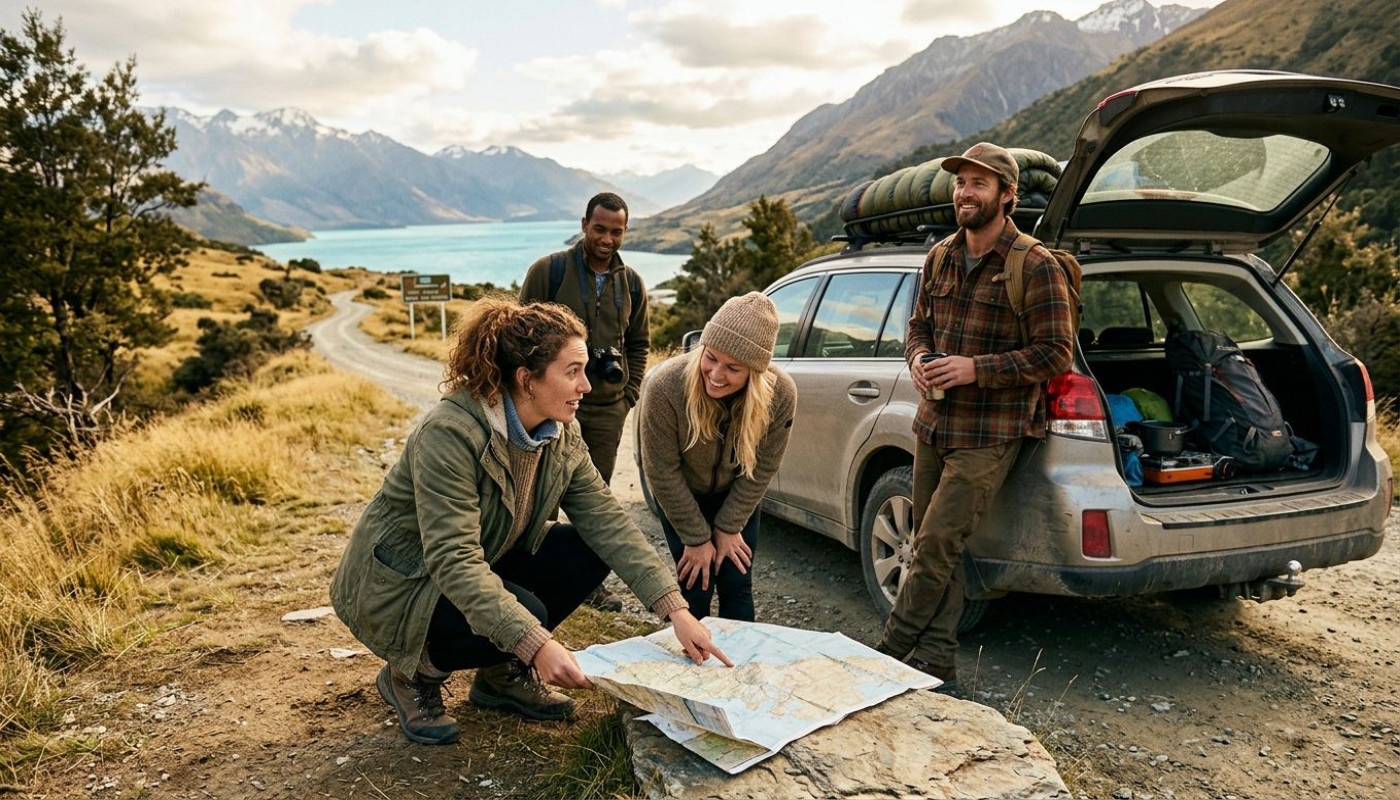
It only takes one slip. A delayed flight, a museum sold out, a road closed for a festival, and suddenly the day opens, and with it a version of the destination you did not preselect. Psychologists have long described how novelty and mild uncertainty can heighten attention, making memories “stick” more strongly than routine experiences, and travel magnifies that effect because your brain is already scanning for cues. The detour works partly because it interrupts the automation of following a plan, you ask more questions, you look up from the screen, and you begin to negotiate your surroundings again.
That negotiation is where a trip often turns personal. Travelers who allow themselves to pivot tend to interact more with locals, not in staged encounters but in practical ones: asking for directions, learning why a street is blocked, accepting a recommendation that was never in the guide. In cities, this can mean stumbling into a neighborhood market at the exact hour when lunch vendors are busiest, or catching a community event that was not translated into English online. In rural areas, it can mean choosing a slower route and realizing the landscape is the attraction, not the endpoint. The unexpected stop becomes a narrative hinge, because it introduces a choice you actually made, rather than one you copied.
But detours are not just about vibes, they can reframe what you thought the trip was for. A traveler who arrived “to see the icons” may discover they care more about food culture, or craft, or wildlife, or music scenes. This is why spontaneous travel can feel more “authentic,” not because it is purer, but because it reveals your own preferences in real time. The most striking part is how quickly that new preference reshapes the rest of the journey, you start building days around what you learned yesterday, and the itinerary becomes iterative, closer to reportage than to choreography.
Spontaneity needs structure, not chaos
Freedom is not the same as improvisation without a safety net. The most successful detours happen when travelers put a few guardrails in place, then give themselves permission to roam inside them. Budget is the first guardrail, because “just one more experience” can quietly become a financial hangover. A practical approach is to separate fixed costs from flexible costs, then cap the flexible portion per day. If your accommodation and long-distance transport are paid, you can allocate a daily envelope for local transport, food, entrances, and one optional splurge, and when the envelope is gone, the detour becomes a walk, not a purchase.
Time is the second guardrail, and it is more valuable than money on the road. Travelers often overestimate what they can do in a day, then interpret the inevitable failure as a reason to push harder. A better system is to anchor the day with one non-negotiable objective, such as a reservation, a hike window, or a sunset spot, then treat everything else as modular. This is where spontaneity actually becomes calmer, because you are not trying to rescue a collapsing plan, you are choosing among options that all fit. Travel advisors increasingly design “free blocks” into itineraries for this reason, and some tour operators now market flexibility explicitly, offering partial planning while leaving meaningful space for local adaptation.
The third guardrail is information. Spontaneous does not mean uninformed, it means you decide later with better context. A few habits make detours safer and more rewarding: downloading offline maps, checking local transit status, and keeping a short list of “nearby backups” that work in different weather. In destinations with altitude, remote terrain, or limited infrastructure, it also means respecting conditions, carrying basic supplies, and understanding local guidance. Many countries publish official travel advisories and safety updates through government channels, and those are more reliable than viral posts, especially when the issue is weather or road access. The goal is not to eliminate surprise, it is to avoid preventable mistakes that turn a detour into an emergency.
Why Peru rewards the unplanned turn
Some countries feel like they were built for detours. Peru is one of them, because it offers dramatic variety across short distances, and because its cultural life is not confined to a single “top ten” list. One day you are in colonial streets, the next you are in highland valleys, then you are tasting regional cuisine that differs sharply from one province to another. The official tourism board PromPerú has long promoted the country through themes that range from gastronomy to nature and living cultures, and that breadth matters for spontaneity, because it means a Plan B is rarely a downgrade, it is simply a different chapter.
On the ground, unplanned shifts can be triggered by the same realities that affect travel everywhere: weather, transport changes, and crowd management at headline sites. Machu Picchu, for example, operates with timed entry and regulated circuits, and tickets can sell out in peak periods, pushing travelers to adjust dates, routes, or even priorities. That can feel like a frustration until you realize what sits around the famous postcard: lesser-known Inca sites, community-run experiences, and landscapes that reward slower travel. The Sacred Valley is full of places where you can spend an afternoon without feeling processed, and in Cusco itself, a sudden decision to stay an extra night can transform your experience, because the city’s rhythm changes after day-trippers leave.
Peru also shows why “spontaneous” works best when paired with local expertise. Remote logistics, altitude acclimatization, and the sheer number of regional options can overwhelm even confident travelers, and that is where curated flexibility becomes powerful: a base plan that covers essentials, with room to pivot when a recommendation appears. For travelers looking to explore with that balance, resources such as https://www.peru-spirit.com can help map possibilities while still leaving space for the detour that makes the trip yours. The point is not to surrender control, it is to move the control to the moments when you actually have better information, on location, in context, and with the ability to choose what feels right.
How to book smarter, leave room
Make the trip flexible on purpose. If you are traveling in high season, book the hardest-to-get elements early, such as limited-entry sites, long-distance transport, and accommodation in small towns, then leave day activities open, and treat local discoveries as the main course rather than an add-on. Aim for a clear budget split between fixed and flexible spending, and remember that guided days often cost more upfront but can reduce hidden costs, because you are not constantly buying your way out of confusion.
Check what support exists. Some destinations and regions offer discounts or passes for students, residents, or off-peak visits, and in parts of Peru, community tourism initiatives can channel money directly to local households, which is both an ethical choice and often a richer experience. Above all, give yourself at least one unbooked half-day per three days, because that is usually enough to follow the recommendation you did not know you needed.
On the same subject

From Inspiration To Passport Stamp: The Journey Of An Idea

Travel Hacks No One Tells You Before Your First Solo Trip
How To Choose The Best ESIM Plan For Your Travel Needs?

How does tourism profit visitors?

3 counsels on knowing where to visit

Top 4 places you should try visiting

3 things you should know about tourism
